
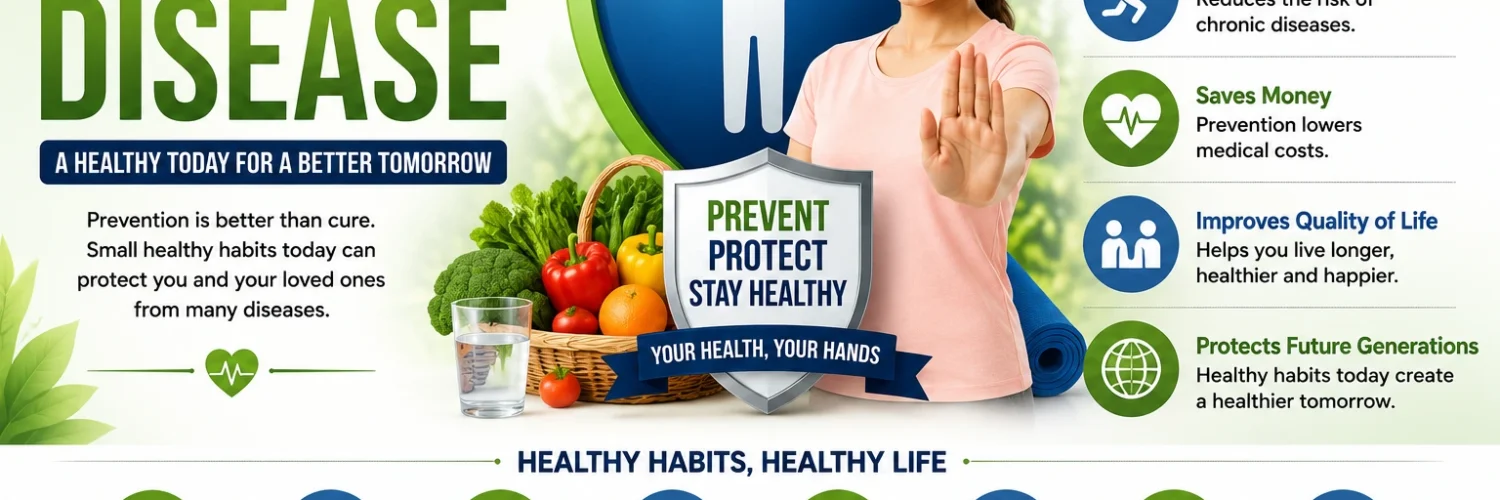

Disease-specific means of prevention of disease are targeted measures designed to prevent a particular disease or reduce its spread. Examples include vaccination against mumps, condoms, and testing for sexually transmitted diseases, mosquito control for malaria, and screening for certain cancers. These measures work alongside broader health promotion and the levels of disease prevention: primordial, primary, secondary, and tertiary prevention.
What Are Disease-Specific Means of Prevention of Disease?
When we talk about prevention of disease, we are not simply talking about avoiding illness after symptoms appear. Prevention begins much earlier. It includes the actions people, healthcare professionals, communities, and governments take to reduce risk, stop disease before it starts, identify illness early, and limit complications.
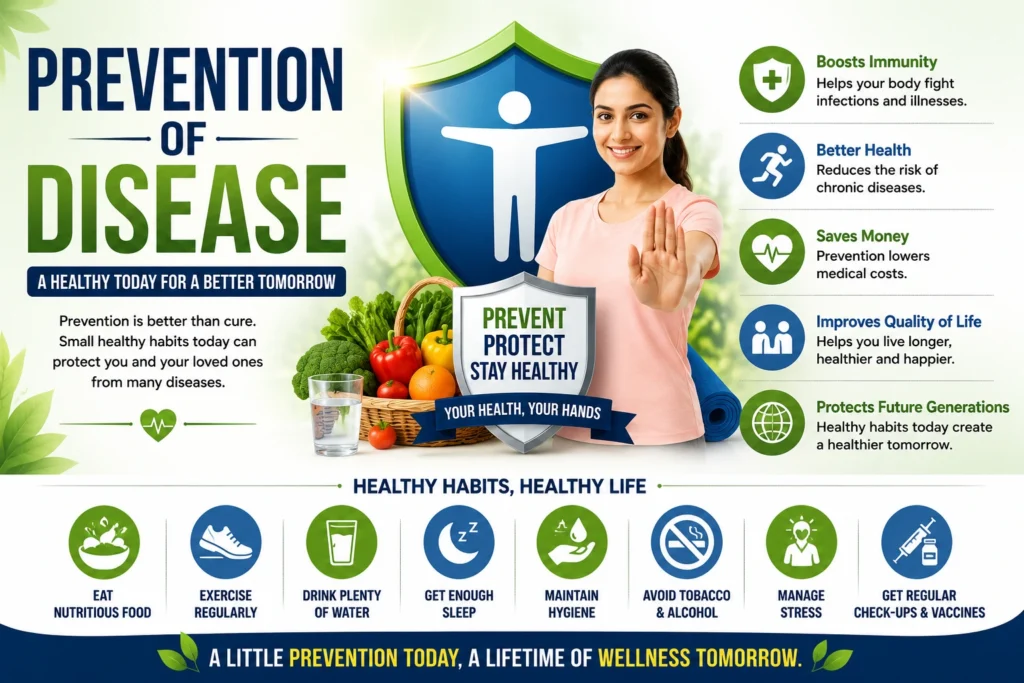
So, what are disease specific means of prevention?
Disease-specific means of prevention are targeted preventive measures aimed at a particular disease, infection, risk, or health condition. Instead of improving health in a general sense, these interventions focus on breaking the chain or pathway through which a specific disease develops or spreads.
For example:
- MMR vaccination helps prevent mumps.
- Condoms reduce the risk of many sexually transmitted infections.
- HPV and hepatitis B vaccination protect against specific infections.
- Screening can identify certain diseases before they cause obvious symptoms.
- Contact tracing and appropriate isolation can help control communicable diseases.
- Controlling mosquitoes helps reduce diseases transmitted by mosquitoes.
This distinction matters because general healthy habits and disease-specific protection are not interchangeable.
Eating a nutritious diet, exercising regularly, sleeping adequately, and avoiding tobacco support overall health. However, these actions alone cannot replace vaccination against a vaccine-preventable infection or screening recommended for a particular disease.
The World Health Organization describes health promotion as helping people gain greater control over and improve their health, while disease prevention also involves specific interventions that reduce exposure to particular health risks.
Why Is Prevention of Disease Important?
The simplest healthcare strategy is often the one that stops a problem before it becomes serious.
Disease can affect more than an individual’s physical health. It can lead to:
- Missed school or work
- Medical expenses
- Long-term disability
- Reduced quality of life
- Complications
- Hospitalization
- Transmission to family members or communities
- Premature death
Effective prevention of disease can therefore benefit both individuals and populations.
For communicable diseases, prevention may interrupt transmission between people. For noncommunicable diseases, prevention can address risk factors such as tobacco use, unhealthy diets, physical inactivity, harmful alcohol use, and air pollution.
WHO reports that cardiovascular diseases, cancers, chronic respiratory diseases, and diabetes account for a large proportion of premature noncommunicable-disease deaths, while modifiable risk factors contribute substantially to the burden.
In other words, prevention is not merely about “staying healthy.” It is a systematic public-health strategy.
What Are the Levels of Disease Prevention?
Understanding the levels of disease prevention makes the concept much easier.
Traditionally, prevention is divided into:
- Primordial prevention
- Primary prevention
- Secondary prevention
- Tertiary prevention
Some medical and public-health frameworks also discuss quaternary prevention, but the four levels above provide a useful foundation.
| Level | Main goal | Typical timing | Examples |
|---|---|---|---|
| Primordial | Prevent risk factors from developing | Before risk factors become established | Healthy school environments, tobacco-control policies |
| Primary | Prevent disease from occurring | Before disease develops | Vaccination, condoms, sanitation |
| Secondary | Detect disease early | Early disease stage | Screening, early diagnosis |
| Tertiary | Reduce complications and disability | After disease is established | Rehabilitation, complication management |
The exact terminology can vary between public-health frameworks, but the central idea is consistent: prevention can operate at different points in the natural history of disease.
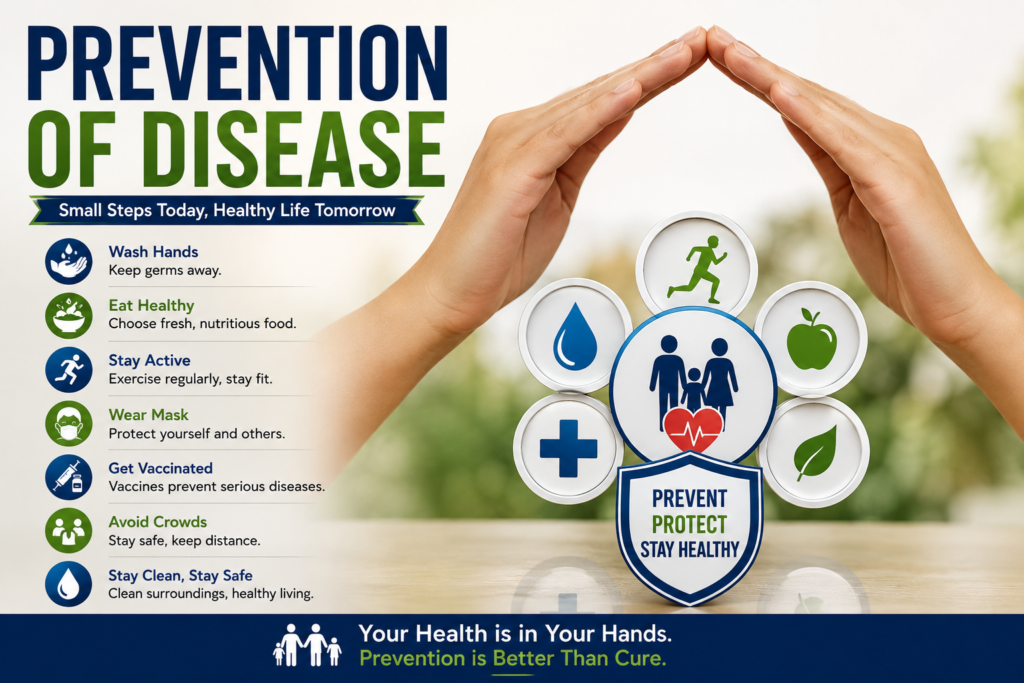
1. Primordial Prevention
Primordial prevention focuses on preventing the development of risk factors themselves.
Think of it as prevention before the risk becomes established.
For example, instead of waiting for people to develop obesity or hypertension and then treating them, communities can create environments that make healthier choices easier.
Examples include:
- Creating safe spaces for physical activity
- Promoting healthy school meals
- Restricting tobacco advertising
- Improving air quality
- Supporting healthier urban planning
- Encouraging healthy food environments
- Reducing exposure to occupational hazards
Primordial prevention is especially important because health is influenced not only by individual choices but also by the environments in which people live, study, work, and travel.
2. Primary Prevention
Primary prevention aims to prevent disease before it occurs.
This is where many disease-specific measures belong.
Examples include:
- Immunization
- Safe drinking water
- Hand hygiene
- Food safety
- Condoms
- Personal protective equipment
- Vector control
- Health education
- Smoking prevention
- Vaccination against specific infections
The National Library of Medicine defines primary prevention as practices intended to prevent disease in susceptible individuals or populations, including health promotion and protective interventions such as immunization and communicable-disease control.
Specific Protection Within Primary Prevention
A particularly useful concept is specific protection.
Specific protection means taking an intervention that directly protects against a particular disease or health threat.
For example:
- MMR vaccination → mumps, measles, and rubella
- HPV vaccination → HPV-related disease
- Hepatitis B vaccination → hepatitis B infection
- Condoms → reduced risk of many STIs
- Insecticide-treated mosquito nets → reduced exposure to mosquitoes
- Protective equipment → reduced occupational exposure
This is the clearest answer to what disease-specific means of prevention are.
3. Secondary Prevention
Secondary prevention focuses on early detection and early intervention.
The disease process may already have started, but the objective is to identify it as early as possible.
Examples include:
- Screening tests
- Early diagnostic testing
- Contact tracing
- Routine blood-pressure checks
- Appropriate cancer screening
- Testing people at increased risk of an infection
- Early treatment after diagnosis
Secondary prevention is especially valuable when early detection changes the outcome.
For example, a person may have an infection without obvious symptoms. Testing can identify the infection and allow appropriate treatment or preventive measures to reduce further transmission.
WHO notes that many sexually transmitted infections can be asymptomatic and emphasizes screening and early diagnosis as important opportunities for treatment and prevention of complications and further transmission.
4. Tertiary Prevention
Tertiary prevention takes place when disease is already established.
The objective is not necessarily to eliminate the disease. Instead, it aims to:
- Prevent complications
- Reduce disability
- Improve function
- Limit disease progression
- Improve quality of life
- Support rehabilitation
Examples include:
- Cardiac rehabilitation after a heart attack
- Physiotherapy following a stroke
- Diabetes complication management
- Pulmonary rehabilitation
- Rehabilitation after injury
- Preventing further complications of chronic disease
This is still prevention of disease-related harm, even though the disease itself is already present.
What Are Disease-Specific Means of Prevention? Examples
The easiest way to understand disease-specific prevention is through practical examples.
Prevention of Mumps Disease
Prevention of mumps disease primarily involves vaccination and measures that reduce transmission.
Mumps is a contagious viral infection. Vaccination with the mumps-containing MMR vaccine is an important preventive measure.
CDC materials identify MMR vaccination as the best way to prevent mumps.
Important measures include:
- Following recommended vaccination schedules
- Checking vaccination status when appropriate
- Following public-health recommendations during outbreaks
- Avoiding close contact when infected
- Following appropriate isolation guidance
- Seeking medical advice when symptoms suggest mumps
- Following infection-control recommendations in healthcare or group settings
Mumps can spread through respiratory droplets and saliva. Therefore, prevention is not simply about vaccination; reducing opportunities for transmission also matters.
Current CDC infection-control guidance recommends exclusion from work for healthcare personnel with suspected or known mumps for five days after the onset of parotitis, or for five days after the first symptom when parotitis does not occur. Public-health guidance can vary by setting and circumstance, so people should follow local recommendations.
Why Vaccination Matters
Vaccination reduces the likelihood of mumps and helps reduce the burden of outbreaks.
However, no vaccine provides a guarantee that infection will never occur. Therefore, vaccination should be combined with appropriate public-health measures when an outbreak occurs.
Prevention of Sexually Transmitted Diseases
Prevention of sexually transmitted diseases requires a combination of behavioral, biomedical, diagnostic, and public-health measures.
Sexually transmitted infections can be caused by bacteria, viruses, or parasites and may spread through vaginal, anal, or oral sexual contact. Some infections can also be transmitted through pregnancy and childbirth, breastfeeding in certain circumstances, or unsafe blood exposure.
Effective prevention may include:
- Correct and consistent condom use
- Appropriate vaccination
- STI testing
- Early diagnosis and treatment
- Testing and treatment of sexual partners when indicated
- Reducing exposure to infection
- Comprehensive sexual-health education
- Access to appropriate healthcare services
Condoms and STI Prevention
Condoms are an important component of prevention of sexually transmitted diseases.
When used correctly and consistently, condoms substantially reduce the risk of many STIs, including HIV. However, they do not eliminate the risk of every STI because some infections can spread through skin-to-skin contact or areas not covered by a condom.
That is why condoms should be viewed as an important prevention tool rather than a guarantee of complete protection.
Vaccination for STI Prevention
Vaccines provide another disease-specific preventive approach.
WHO identifies effective vaccines against:
- HPV
- Hepatitis B
HPV vaccination is particularly important because HPV infection is associated with several cancers, including cervical cancer. Hepatitis B vaccination helps prevent infection with a virus that can cause chronic liver disease and liver cancer.
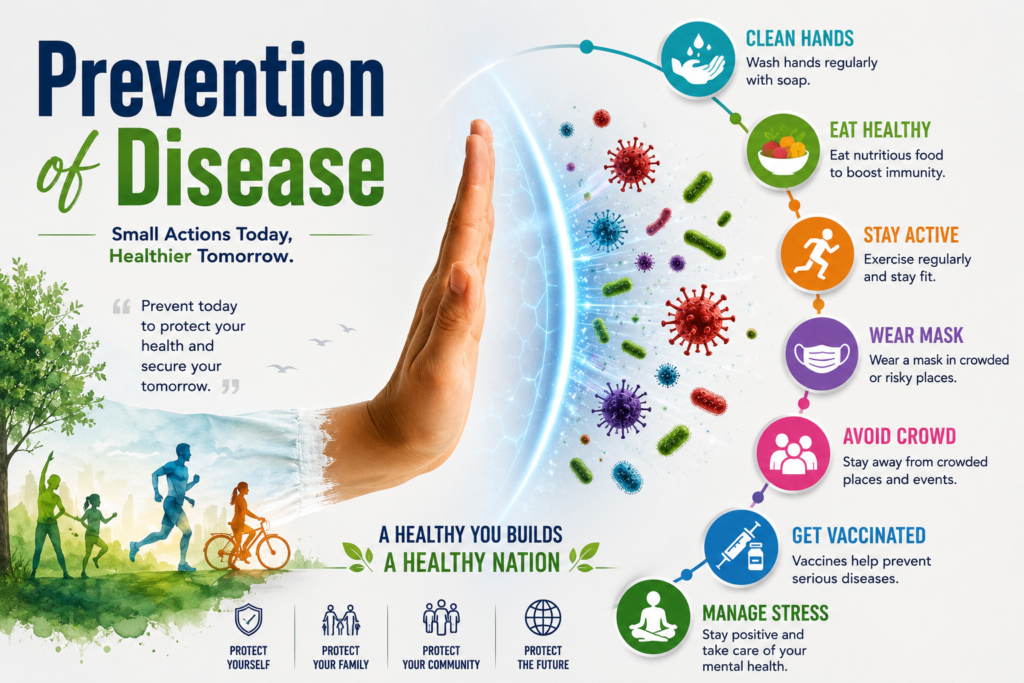
Testing Is Also Prevention
A person can have an STI without noticeable symptoms.
That means waiting for symptoms is not always a reliable prevention strategy.
Testing can:
- Identify infection.
- Enable appropriate treatment.
- Help prevent complications.
- Reduce the chance of unknowingly transmitting infection.
- Help healthcare professionals determine whether partners require evaluation.
For people who may have been exposed to an STI, testing decisions should be based on the infection involved, timing of exposure, symptoms, sexual practices, and clinical guidance.
Disease-Specific Prevention for Common Conditions
| Disease or condition | Disease-specific preventive measures |
|---|---|
| Mumps | MMR vaccination, infection-control measures, appropriate isolation |
| Hepatitis B | Hepatitis B vaccination, safer blood and injection practices |
| HPV-related disease | HPV vaccination, recommended cervical screening |
| Many STIs | Correct condom use, testing, diagnosis and treatment |
| Malaria | Vector control, mosquito-bite prevention, appropriate preventive medicines where recommended |
| Tuberculosis | Early identification, appropriate testing and treatment, contact investigation |
| Dental caries | Fluoride exposure, oral hygiene, dental care, reduced frequent sugar exposure |
| Hypertension | Blood-pressure monitoring, lifestyle measures, early treatment when indicated |
| Type 2 diabetes | Healthy diet, physical activity, weight management where appropriate, risk assessment |
| Some cancers | Appropriate vaccination, screening, avoidance of known carcinogenic exposures |
The exact preventive strategy depends on the disease, population, individual risk, local epidemiology, and available healthcare services.
Difference Between General and Disease-Specific Prevention
This distinction is important for understanding what are disease specific means of prevention.
| General health promotion | Disease-specific prevention |
|---|---|
| Improves overall health | Targets a specific disease or hazard |
| Healthy eating | HPV vaccination |
| Regular physical activity | MMR vaccination |
| Adequate sleep | Condom use to reduce STI risk |
| Avoiding tobacco | Hepatitis B vaccination |
| Stress management | Mosquito-control measures |
| Healthy environments | Screening for a particular disease |
There is overlap between these categories.
For example, physical activity helps prevent several chronic conditions rather than one specific disease. Vaccination, on the other hand, targets particular infections.
Good healthcare systems use both approaches rather than treating them as competing strategies.
How the Levels of Disease Prevention Work Together
The levels of disease prevention should not be viewed as isolated boxes.
Imagine a person at risk of an infectious disease.
Primordial level
The community creates policies and environments that reduce exposure and improve health literacy.
Primary level
The person receives an appropriate vaccine or uses protective measures.
Secondary level
If exposure occurs, appropriate testing or early diagnosis identifies infection.
Tertiary level
If disease develops, treatment and rehabilitation reduce complications and long-term harm.
This layered model is powerful because no single intervention is perfect.
WHO’s approach to primary healthcare similarly emphasizes prevention, early detection, treatment, rehabilitation, and continuity of care rather than treating each activity as an unrelated service.
How Can Individuals Practice Prevention of Disease Every Day?
Prevention does not always require complicated medical procedures.
Simple actions can make a meaningful difference.
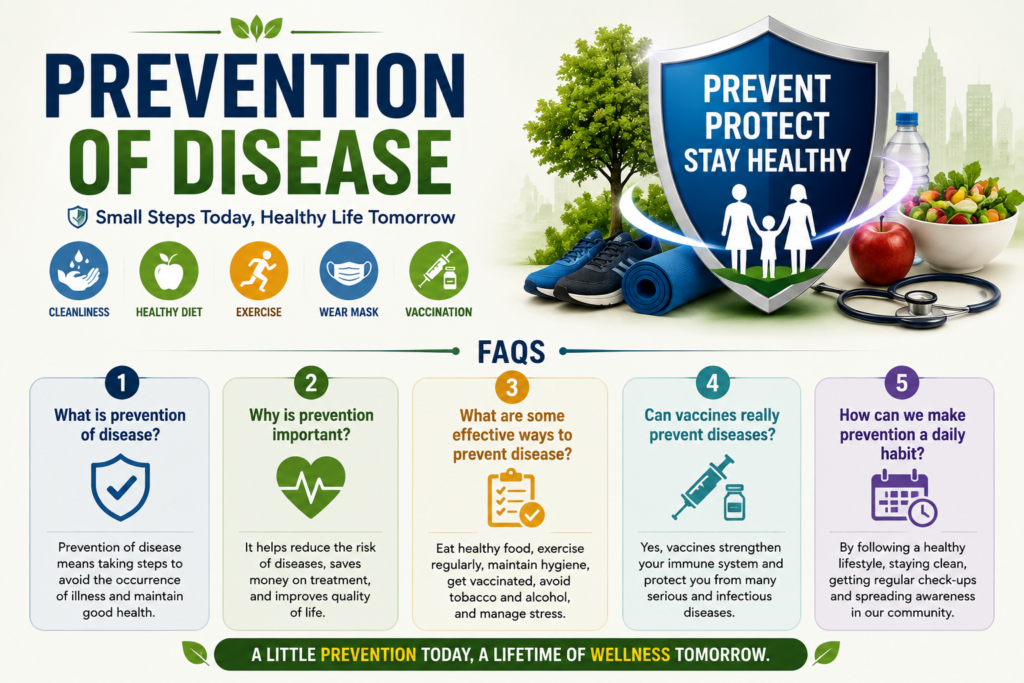
Everyday prevention checklist
- Keep recommended vaccinations up to date.
- Wash hands appropriately.
- Follow food and water safety practices.
- Avoid tobacco.
- Limit harmful alcohol use.
- Eat a balanced diet.
- Stay physically active.
- Maintain a healthy sleep routine.
- Use appropriate protective equipment at work.
- Use condoms correctly when appropriate.
- Get recommended health screenings.
- Seek medical advice for persistent or concerning symptoms.
- Follow treatment instructions when diagnosed with a disease.
- Avoid spreading infectious illness to others when advised to isolate.
The key is consistency.
Prevention works best when it becomes part of routine life rather than something considered only after illness occurs.
What Makes Disease-Specific Prevention Effective?
An effective preventive intervention usually has several characteristics.
1. It targets a known risk
The intervention should address a recognized pathway through which disease occurs or spreads.
2. It is evidence-based
Prevention should rely on reliable scientific evidence rather than unsupported health claims.
3. It is appropriate for the individual
Age, pregnancy status, medical history, vaccination history, exposure, and other factors can change what prevention strategy is appropriate.
4. It is accessible
A highly effective intervention has limited public-health impact if people cannot access it.
5. It is used correctly
For example, condoms provide substantially better protection when used correctly and consistently.
6. It works alongside other measures
Vaccination, screening, safer behaviors, early diagnosis, and treatment often work better as complementary strategies.
Common Mistakes About Prevention of Disease
Mistake 1: “If I feel healthy, I don’t need prevention.”
Not necessarily.
Some diseases can remain silent for a significant period. Preventive healthcare can identify risk or disease before symptoms become obvious.
Mistake 2: “One prevention method protects against everything.”
It does not.
For example, condoms are highly useful for reducing transmission of many STIs but do not eliminate every STI risk. Vaccines also protect against specific pathogens rather than all infections.
Mistake 3: “Prevention means only vaccination.”
Vaccination is extremely important for certain diseases, but prevention also includes screening, sanitation, safer behaviors, environmental controls, early diagnosis, and treatment.
Mistake 4: “Treatment and prevention are completely different.”
They can overlap.
Early treatment can prevent complications and, in some infections, reduce onward transmission. That is why prevention must be understood across the full disease pathway.
Internal Linking Opportunities
For a health website, strategic internal linking can help readers discover related information without interrupting the article.
Consider linking this article to relevant pages such as:
- [Benefits of Pistachio Nuts]: link when discussing healthy dietary patterns.
- [Prevention of Disease]: use as a broader pillar-page link.
- [Healthy Lifestyle Tips]: link from the section about everyday prevention.
- [Benefits of Regular Exercise]: link from physical-activity recommendations.
- [Importance of Vaccination]: link from the mumps and vaccine sections.
- [Sexually Transmitted Diseases Symptoms and Prevention]: link from the STI section.
Use descriptive anchor text rather than generic anchors such as “click here.”
Frequently Asked Questions
1. What are disease-specific means of prevention?
Disease-specific means of prevention are targeted actions designed to prevent a particular disease or reduce its transmission. Examples include vaccination for mumps, HPV vaccination, hepatitis B vaccination, condom use for STI prevention, and mosquito-control measures for mosquito-borne infections.
2. What are the levels of disease prevention?
The major levels of disease prevention are primordial, primary, secondary, and tertiary prevention. Primordial prevention addresses risk factors before they become established; primary prevention prevents disease; secondary prevention detects disease early; and tertiary prevention reduces complications and disability.
3. What is primary prevention?
Primary prevention aims to prevent a disease before it occurs. Examples include vaccination, sanitation, health education, safer sexual practices, protective equipment, and measures that reduce exposure to infectious or environmental hazards.
4. What is secondary prevention?
Secondary prevention focuses on early detection and early intervention. Screening, diagnostic testing, and identifying disease before complications develop are common examples.
5. What is tertiary prevention?
Tertiary prevention focuses on people who already have a disease. Its goal is to reduce complications, disability, disease progression, and loss of quality of life.
6. What is prevention of mumps disease?
Prevention of mumps disease includes appropriate MMR vaccination and measures that reduce transmission. People with suspected or confirmed mumps should follow medical and public-health guidance regarding isolation and infection control.
7. What is prevention of sexually transmitted diseases?
Prevention of sexually transmitted diseases includes correct and consistent condom use, vaccination against preventable infections such as HPV and hepatitis B, appropriate STI testing, early diagnosis and treatment, and reducing exposure to infection.
8. Can sexually transmitted infections occur without symptoms?
Yes. Many STIs may not produce noticeable symptoms. This is one reason testing can be an important part of sexual-health prevention and early intervention.
9. Is vaccination a form of disease-specific prevention?
Yes. Vaccination is one of the clearest examples of specific protection because a vaccine targets a particular pathogen or group of pathogens and aims to reduce the risk of associated disease.
10. Why is prevention better than waiting for disease?
Prevention can reduce the risk of disease, identify illness earlier, prevent transmission, and reduce complications. It can also lower the personal, social, and economic burden associated with avoidable disease.
Key Takeaway
So, what are disease-specific means of prevention?
They are targeted preventive measures aimed at stopping a particular disease before it occurs, reducing its transmission, identifying it early, or limiting its complications.
The concept becomes much clearer when viewed through the levels of disease prevention. Primordial prevention works on the conditions that create risk; primary prevention prevents disease; secondary prevention detects disease early; and tertiary prevention reduces the consequences of established disease.
Examples make the concept practical. Prevention of mumps disease relies heavily on mumps-containing vaccination and infection-control measures. Prevention of sexually transmitted diseases combines condoms, vaccination, testing, safer sexual practices, diagnosis, treatment, and appropriate partner management.
Ultimately, effective prevention of disease is not one action. It is a layered strategy involving individuals, healthcare professionals, communities, and public-health systems.
About This Article
This article is intended for general health education and explains common public-health concepts surrounding disease-specific prevention and the levels of disease prevention.
Health recommendations can differ according to age, medical history, pregnancy status, vaccination history, exposure, geographic location, and current public-health guidance. This article should not replace personalized medical advice from a qualified healthcare professional.
About Us
We publish evidence-informed health and wellness content designed to make medical and public-health concepts easier to understand. Our goal is to provide practical, readable information while encouraging readers to consult qualified healthcare professionals for personal medical decisions.
Contact Us
For questions, corrections, source suggestions, or editorial feedback, please contact the website’s editorial or support team through the official Contact Us page.
Author Bio
Author: Health & Wellness Editorial Team
The Health & Wellness Editorial Team develops educational content using established public-health and medical references. Articles covering disease prevention, infections, nutrition, and general health are reviewed for clarity and responsible presentation of health information.



Add comment